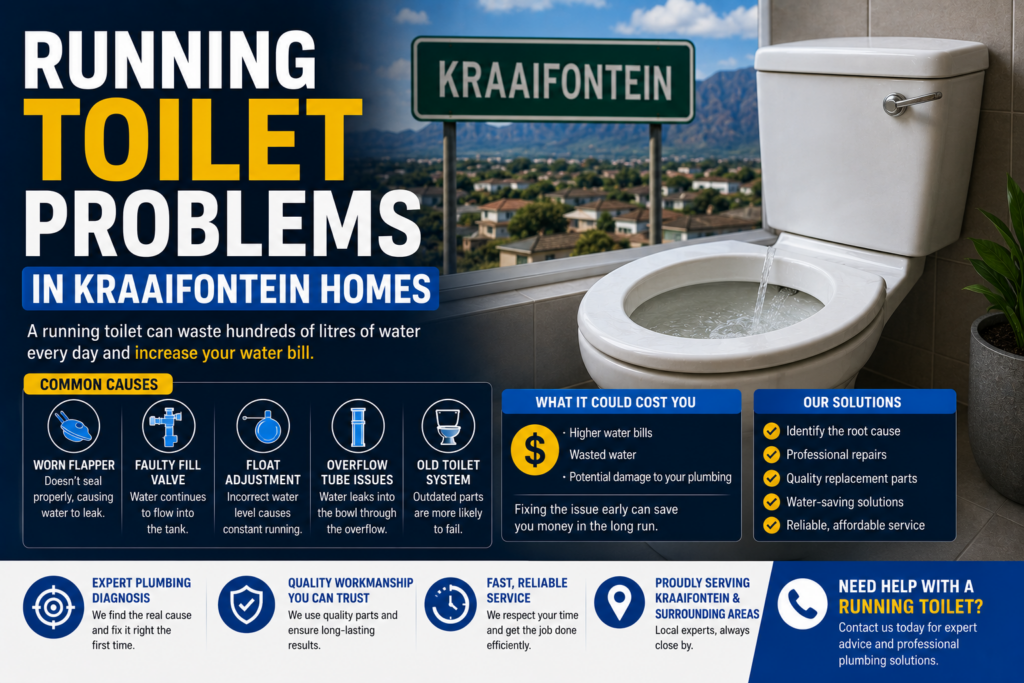
Running Toilet Problems in Kraaifontein Homes
A toilet that keeps running after flushing may seem like a small annoyance, but it can waste thousands of litres of water and lead to expensive plumbing problems if ignored.
Most homeowners have experienced a toilet that continues running long after the flush has finished. At first, it may seem like a minor issue that can be ignored for a few days or weeks. However, a constantly running toilet is often one of the most wasteful plumbing problems in a home.
Every minute that water continues flowing unnecessarily into the toilet bowl, money is literally being wasted. Over time, a running toilet can significantly increase water bills, place extra strain on plumbing components and hide developing faults inside the cistern.
In many Kraaifontein homes, running toilets are caused by worn internal components that can often be repaired before more expensive damage occurs. Understanding the causes of the problem can help homeowners act early and avoid unnecessary costs.
How Does a Toilet Keep Running?
To understand why a toilet keeps running, it helps to understand how the flushing system works. When you flush, water leaves the cistern and flows into the bowl. Once the flush is complete, the cistern refills and automatically stops filling when the correct water level is reached.
A running toilet occurs when something prevents this process from completing properly. Water may continue flowing into the bowl, continue filling the cistern unnecessarily or leak slowly through internal components.
Because most of these problems happen inside the cistern, many homeowners do not immediately realise how much water is being wasted. The toilet still appears functional, but the internal system is no longer operating correctly.
Some toilets run continuously, while others cycle on and off throughout the day. Both situations indicate that repairs are needed.
Faulty Flapper Valves and Seal Problems
One of the most common causes of a running toilet is a worn or damaged flapper valve. The flapper sits at the bottom of the cistern and creates a seal that prevents water from continuously entering the toilet bowl.
Over time, rubber flappers naturally wear out. They may become brittle, warped or damaged due to age and constant exposure to water. When this happens, the seal becomes imperfect and water slowly leaks into the bowl.
As water leaks out of the cistern, the refill mechanism continuously adds more water to maintain the correct level. This creates the familiar sound of a toilet that never seems to stop running.
Although the repair may appear simple, identifying the exact faulty component is important because several internal parts can produce similar symptoms.
Problems With the Fill Valve
The fill valve controls the water entering the cistern after a flush. If the valve becomes worn, blocked or damaged, it may continue allowing water into the tank even when the correct water level has been reached.
Some homeowners notice a constant hissing sound coming from the cistern. Others hear water running intermittently throughout the day. Both situations often point to fill valve issues.
Mineral buildup, debris inside the valve and normal wear can all affect performance. In older toilets, the entire fill mechanism may need replacement rather than repair.
If ignored, a faulty fill valve can waste a surprising amount of water over time and increase monthly utility costs significantly.
High Water Levels Inside the Cistern
Sometimes a running toilet is caused by the water level inside the cistern being set too high. When the water rises above the overflow level, excess water continuously flows into the bowl.
This problem may occur after previous repairs, adjustments to the float mechanism or gradual wear inside the cistern components. The toilet may appear to flush normally, but water continues escaping through the overflow system.
Many homeowners are unaware of this issue because the water entering the bowl is often clear and difficult to notice. However, the constant movement of water can usually be seen if you look carefully inside the bowl after flushing.
Correcting the water level may solve the problem, but it is important to determine why the adjustment became necessary in the first place.
How a Running Toilet Increases Water Bills
A running toilet is one of the most common hidden causes of high water bills. Because the leak occurs internally, many homeowners do not notice the amount of water being wasted each day.
Even a small continuous flow can add up to hundreds or thousands of litres of wasted water every month. The longer the problem continues, the larger the financial impact becomes.
Some homeowners only discover the issue after receiving an unexpectedly high municipal water bill. Others notice increased water usage despite no change in household habits.
If your water bill has increased recently, you should also read our guide on Why Your Water Bill Is High in Kraaifontein.
When a Running Toilet Indicates a Bigger Plumbing Problem
While most running toilets are caused by internal cistern components, recurring problems can sometimes indicate broader plumbing issues. Excessive water pressure, aging plumbing systems and poorly installed fixtures can all contribute to repeated toilet failures.
If the toilet continues developing the same problem shortly after repairs, a more detailed inspection may be necessary. Simply replacing the same component repeatedly does not always address the root cause.
Homeowners should also pay attention to additional warning signs such as leaking pipes, fluctuating water pressure or dampness around bathroom fixtures.
These symptoms may point to wider plumbing issues affecting the home.
Should You Repair or Replace the Toilet?
Many running toilets can be repaired quickly and cost-effectively. Replacing worn seals, fill valves or flush mechanisms is often enough to restore proper operation.
However, if the toilet is very old, frequently develops problems or has multiple failing components, replacement may provide better long-term value. Newer toilets are often more water-efficient and can reduce future maintenance requirements.
A professional plumber can inspect the toilet and recommend whether repair or replacement makes more financial sense.
You can also visit our Toilet Repairs & Installation Kraaifontein page for more information.
Nearby Plumbing Assistance
We also assist homeowners through our nearby plumbing network, including Kuils River plumbers, Brackenfell plumbers and Bellville plumbers. These nearby service areas help customers find reliable plumbing support closer to home.
Need Help Fixing a Running Toilet?
Get professional assistance before a small toilet problem turns into a costly water bill.