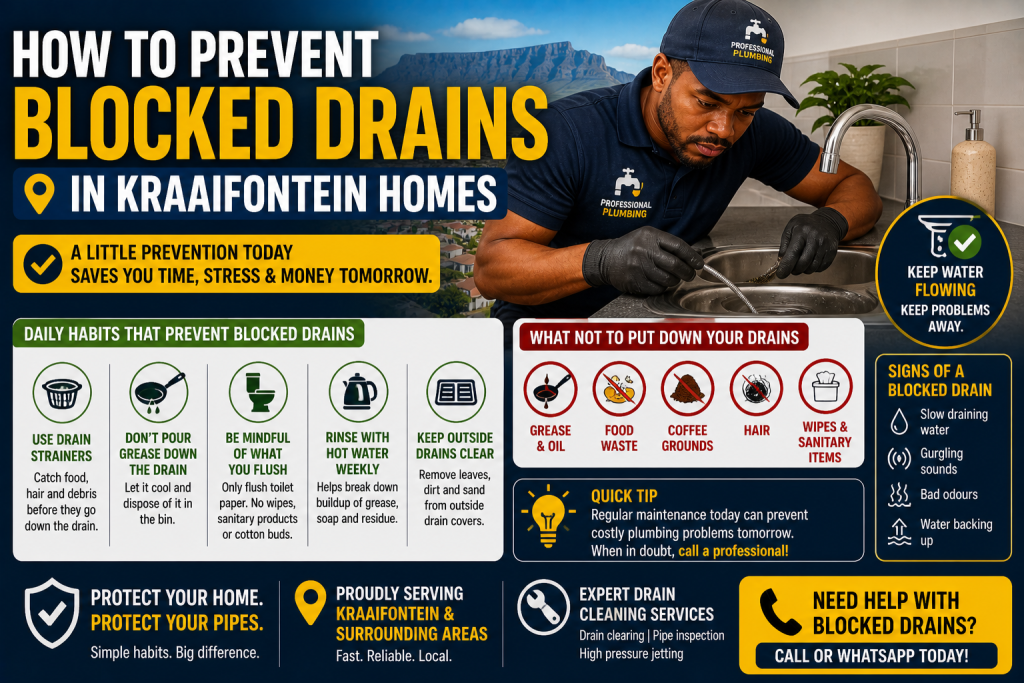
How to Prevent Blocked Drains in Kraaifontein Homes
Blocked drains can cause bad smells, slow drainage, overflowing water and costly plumbing damage. Here’s how Kraaifontein homeowners can prevent drain problems before they become emergencies.
The problem often starts with small warning signs. A kitchen sink may drain slower than usual. A shower may leave water standing around your feet. A toilet may gurgle after flushing. These signs are easy to ignore, but they usually mean the blockage is already forming inside the drainage system.
If the drain is already blocked, visit our blocked drains service in Kraaifontein. However, if your drains are still working, the advice below can help you reduce the risk of future blockages.
Why Blocked Drains Are So Common in Kraaifontein Homes
Many Kraaifontein homes deal with blocked drains because of everyday household habits. Kitchen sinks often collect cooking oil, gravy, sauces, rice, coffee grounds and small food scraps. Once grease cools inside the pipe, it sticks to the pipe wall and catches more debris over time.
Bathroom drains have a different problem. Hair, soap scum, toothpaste, shampoo residue and body oils can combine into a thick buildup inside the waste pipe. This is why shower and basin drains often start draining slowly before they block completely.
Outdoor drains can also become blocked, especially when leaves, sand, mud and garden debris wash into the drain during rain or cleaning. If the outside drain connects to other household waste lines, a blockage there can affect more than one part of the home.
Do Not Pour Grease or Oil Down the Kitchen Sink
Grease is one of the biggest causes of blocked kitchen drains. Many homeowners pour hot oil or fat down the sink because it looks liquid at the time. The problem starts once that grease cools down inside the pipe. It hardens, sticks to the pipe walls and slowly narrows the drain opening.
Once grease has built up, food particles and other debris attach to it easily. This can eventually cause a stubborn blockage that boiling water alone will not fix. In some cases, the pipe may need professional drain cleaning to remove the buildup properly.
The safer option is to pour used oil or fat into an old container, let it cool, and throw it away with household waste. Also wipe greasy pots and pans with paper towel before washing them. This small habit can make a big difference over time.
Use Drain Covers in Kitchens, Bathrooms and Showers
Drain covers are simple, affordable and very effective. They stop hair, food scraps and small objects from entering your drainage system. This is especially useful in showers, bathroom basins and kitchen sinks where blockages often begin.
In bathrooms, hair is one of the biggest causes of slow drains. When hair combines with soap residue, it can form a thick clog that catches more debris every time water flows through the pipe. A drain cover helps catch the hair before it enters the drain.
In the kitchen, a sink strainer can stop rice, vegetable peels, coffee grounds and small pieces of food from washing into the waste pipe. Clean the strainer daily so it does not become smelly or overflow back into the sink.
Be Careful What You Flush Down the Toilet
Toilets are designed for human waste and toilet paper only. Items like wet wipes, paper towels, cotton buds, sanitary products, nappies and cleaning cloths should never be flushed. Even wipes labelled as “flushable” can cause problems because they do not break down as easily as toilet paper.
When these items get stuck inside the pipe, they can create a blockage that affects the toilet and sometimes other drains in the home. A blocked toilet can quickly become an emergency, especially if water starts rising after flushing.
If a toilet blocks repeatedly, it may point to a deeper drainage issue rather than a once-off blockage. In that case, it is better to get a plumber to inspect the line before the problem becomes worse.
Flush Drains With Hot Water Regularly
Hot water can help reduce grease and soap buildup before it becomes serious. For kitchen sinks, running hot water after washing dishes can help move light grease residue through the pipe. However, this should not be used as an excuse to pour oil down the drain.
For bathroom drains, regular flushing can help move soap residue and minor buildup. You can also remove visible hair from the drain cover before it gets pulled deeper into the pipe.
Avoid using harsh chemical drain cleaners too often. These products may provide temporary relief, but they can damage older pipes and may not fully remove the blockage. If water is already backing up, professional help is usually safer.
Watch for Early Warning Signs of a Blocked Drain
Most blocked drains show warning signs before they stop working completely. The earlier you respond, the easier and cheaper the problem is usually to fix.
- Water draining slowly from sinks, showers or baths
- Bad smells coming from the drain
- Gurgling sounds after water drains away
- Water backing up into another fixture
- Toilet water rising higher than normal after flushing
- Outdoor drains overflowing after heavy water use
If you notice more than one of these signs, the blockage may be deeper in the system. You can also read our common plumbing problems in Kraaifontein guide for more warning signs homeowners should not ignore.
When DIY Drain Cleaning Is Not Enough
Small surface-level blockages can sometimes be cleared with a plunger or by removing visible debris. However, DIY methods have limits. If the blockage is deep inside the pipe, keeps returning, or affects more than one drain, the issue needs proper attention.
Repeated blockages may be caused by hardened grease, tree roots, collapsed pipe sections, poor pipe slope or a main drainage problem. These issues cannot be fixed properly with store-bought drain cleaner.
A professional plumber can use proper tools to clear the blockage and check whether there is a bigger issue. For help, visit our plumbing services in Kraaifontein page.
Nearby Plumbing Support
If you are outside Kraaifontein, we also have nearby plumbing support available through our local network. You can visit Kuils River plumbers, Brackenfell plumbers, or Bellville plumbers for nearby plumbing assistance.
Need Help With a Blocked Drain in Kraaifontein?
Do not wait for a slow drain to become a full blockage. Get reliable plumbing help before water backs up and causes damage.